
Perseid meteor shower: Why is it one of the best meteor showers of the year

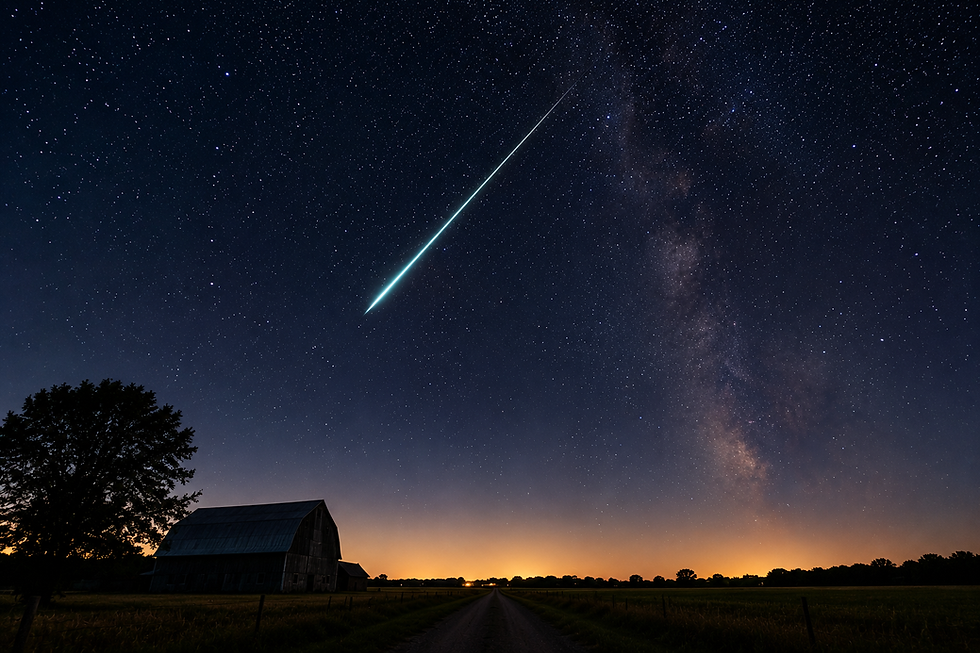
The Perseid meteor shower is one of the most popular meteor showers of the year because it combines lots of bright, fast meteors with comfortable summer nights across much of the Northern Hemisphere.
And here’s the best part: you don’t need to know anything about astronomy to see it.
No telescope. No binoculars. You don’t even need to know where Perseus is.
You basically need darkness, patience and somewhere comfortable to look up.
When is the best time to see the Perseid meteor shower?
The Perseids return every summer, generally becoming active in July and continuing well into August, with the strongest activity typically occurring around August 12 or 13. In 2026, the peak comes overnight August 12–13, with a new moon creating exceptionally dark skies.
Your odds generally improve after midnight and toward the predawn hours because the Perseid radiant climbs higher in the sky. Think of it as Earth turning your side of the planet more directly into the stream of incoming debris.
But what exactly are we running into?
What actually creates all those shooting stars?
Every August, Earth passes through debris scattered through space by Comet 109P/Swift-Tuttle.
The Perseids aren’t really stars falling from the sky at all. They’re tiny particles left behind by the comet, many extremely small, hitting Earth’s atmosphere at about 37 miles per second, or roughly 133,000 mph.
At those speeds, the particles and surrounding air become intensely heated, producing the brilliant streak of light we call a meteor.
Which makes the next part almost ridiculous.
Something tiny enough to hold between your fingers can produce a streak of light visible across miles of sky.
Why do the Perseids happen every single year?
The Perseid meteor shower returns because Earth travels through roughly the same region of Swift-Tuttle’s debris stream every time our planet makes another trip around the Sun.
Picture a racetrack with a dusty patch across one section. Every lap, your tires have to cross it again.
Earth does essentially the same thing.
That’s why astronomers can put meteor showers on calendars years in advance. We aren’t waiting for meteors to randomly show up. We’re the ones traveling back into them.
And some pieces put on a much bigger show than others.
Why are the Perseids famous for fireballs?
Larger pieces of comet debris can create exceptionally bright meteors called fireballs, and the Perseids are particularly well known for them.
Some can briefly become bright enough to make you instinctively yell, “WHOA!” before you’ve even had time to think about what you saw. They can also leave glowing trails, called persistent trains, hanging in the sky for several seconds after the meteor itself disappears.
That brightness also means you might catch an especially good Perseid from a suburb or city.
But if you want the real show, darkness changes everything.
How can you see more Perseids?
Get as far from artificial light as reasonably possible and give your eyes at least 20 minutes to adjust to the darkness. Then put the phone away, lie back and take in as much sky as you can.
Don’t bother with a telescope. It actually works against you because it dramatically narrows the amount of sky you’re watching.
And don’t stare only toward Perseus. That’s the constellation the meteors appear to radiate from, which gives the shower its name, but Perseids can streak across virtually any part of the sky.
Under a truly dark rural sky near the peak, 30 to 50 Perseids an hour is considered a normal observed rate, although actual numbers can vary considerably with your location and conditions.
From a bright city, you may see dramatically fewer.
But here’s the thing.
You only need one really good one.
One brilliant streak suddenly tearing across a sky you’ve looked at thousands of times is enough to remind you that Earth isn’t just sitting beneath the universe.
We’re flying through it.
And every August, for a few nights, the Perseids make that impossible to forget.
Talk Weather To Me!
Love weather stories that make you say, “I never knew that!”?
Join the free Talk Weather To Me newsletter and get one fascinating weather or science story delivered to your inbox every morning in about two minutes. No hype. Just one great curiosity to start your day.
Subscribe free at WeatherNerdy.com/daily.


Comments