
Is this Indian summer? Not so fast
- Ric Kearbey

- 8 hours ago
- 4 min read

It’s September. Meteorological fall has officially begun. And across a huge chunk of the country, especially the Midwest, it feels anything but fall.
So is this Indian summer?
Probably not.
Despite the way we commonly use the phrase, Indian summer doesn’t simply mean really hot weather that happens during fall. Traditionally, it describes a return of unusually warm fall weather after cooler weather has already arrived, usually after the season’s first frost. That’s also essentially how the National Weather Service defines the term.
And that’s the important part.
Summer has to leave before it can come back.
So if this isn’t Indian summer, what actually counts?
Imagine it’s several weeks from now. You’ve already pulled the jacket out of the closet, chilly nights have returned and maybe you’ve even scraped frost off the windshield one morning.
Summer, as far as you’re concerned, is over.
Then the atmosphere changes its mind.
For several days, sunshine returns. Afternoon temperatures climb well above normal. The weather turns warm, dry and quiet, and suddenly that jacket you triumphantly retrieved from storage is riding around uselessly in the back seat again.
That’s much closer to a traditional Indian summer.
An old National Weather Service discussion describes the classic version as warm, quiet and sometimes hazy autumn weather. Some historical definitions even require a frost or killing frost beforehand, although there isn’t one universally accepted checklist.
In other words, Indian summer isn’t summer hanging around.
It’s summer making a comeback.
Which raises an obvious question if you’re sweating through this week.
Then what is this ridiculous September heat?
It’s a late-summer heat wave.
That isn’t just semantics. It’s literally what the National Weather Service in Central Illinois is calling the current pattern. An Extreme Heat Warning is in effect there through Friday, with highs potentially exceeding 100 degrees in some areas and heat index values around 105 degrees.
And the heat extends well beyond Illinois. The Weather Prediction Center described dangerous heat stretching from the central and southern Plains eastward through the Midwest, Mid-Atlantic and Southeast. Kansas City was around 99 degrees Wednesday afternoon, with more upper 90s forecast into the weekend.
The heat is so widespread and persistent that electricity demand is straining major power grids serving tens of millions of Americans.
So yes, this is real September heat.
It just isn’t necessarily Indian summer.
But wait. Didn’t fall begin Monday?
How can it be this hot if fall already started?
Because the atmosphere doesn’t own a calendar.
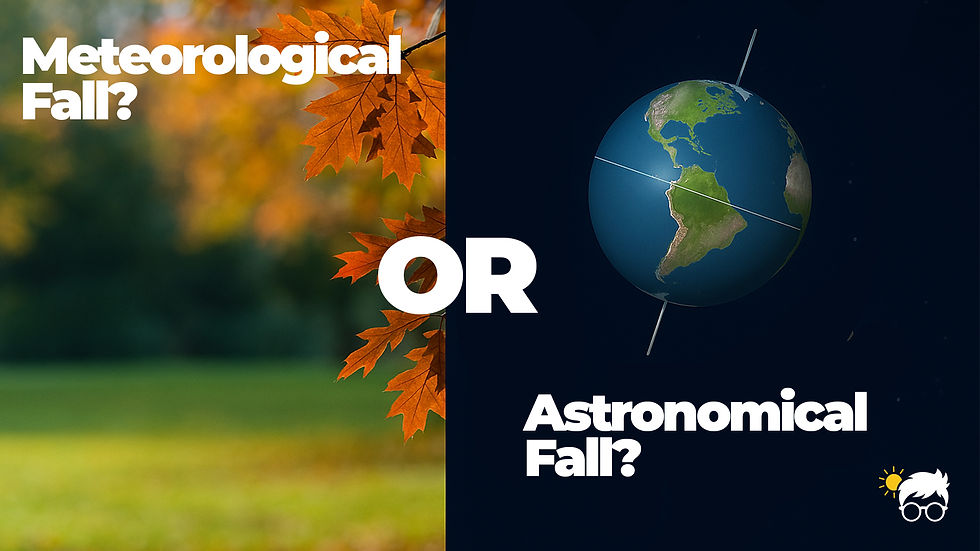
Meteorological fall begins September 1 because dividing the seasons into complete three-month blocks makes weather records and climate statistics much easier to compare. It does not mean some giant atmospheric switch flips at midnight on August 31.
There is still plenty of summer heat hanging around in early September. Right now, a strong area of high pressure in the upper atmosphere is helping keep that heat locked over a large part of the central and eastern United States. In Central Illinois, the National Weather Service says upper-level ridging remains dominant while temperatures stay well above normal.
Think of September 1 as changing the label on the folder, not changing the weather inside it.
The calendar changed. The atmosphere didn’t sign anything.
So if September 1 doesn’t define Indian summer, what does?
Is there an official Indian summer temperature?
Nope.
There is no magic temperature, number of days or official government threshold that suddenly turns a warm fall afternoon into Indian summer.
It doesn’t have to reach 80 degrees. It doesn’t have to last three days. And your local National Weather Service office is never going to interrupt television programming with an Indian Summer Warning. 😂
It’s a traditional weather expression rather than a formally classified weather event. Even the frost requirement varies somewhat among historical definitions, although the central idea is remarkably consistent: cool fall weather arrives, and then an unusually warm spell follows it.
And once you understand that, there’s one final question that becomes awfully hard to ignore.
Why do we call it “Indian summer” anyway?
Ahhh.
Now we’ve found another rabbit hole.
The expression goes back at least to the 18th century in North America, but its exact origin is surprisingly murky. A National Weather Service historical account discusses several proposed explanations and notes that the expression was already apparently in circulation when it appeared in writing in the late 1700s.
There’s also a perfectly reasonable modern question about the phrase itself: Where did it really come from, and should we still be using it?
That deserves more than a throwaway paragraph here.
For today, the weather lesson is much simpler.
If you’re sweating through this remarkable early-September heat, you’re experiencing proof that meteorological fall doesn’t magically make summer disappear.
But Indian summer?
Not yet. Summer has to leave before it can come back.
And when a genuinely chilly stretch finally arrives this fall, followed by one of those beautiful warm, quiet afternoons that seems to borrow a day from summer, you may look at it a little differently.
Talk Weather To Me!
Love weather stories that make you say, “I never knew that!”?
Join the free Talk Weather To Me newsletter and get one fascinating weather or science story delivered to your inbox every morning in about two minutes. No hype. Just one great curiosity to start your day.
Subscribe free at WeatherNerdy.com/daily.


Comments