
The lightning bolt you never see coming


The sunshine trap
Have you ever looked up, seen nothing but blue sky overhead, and figured you were completely safe from lightning?
Most of us have.
After all, lightning comes from thunderstorms, and thunderstorms come with dark clouds, heavy rain, and lots of warning signs. If the sky above you is bright and sunny, it seems impossible that lightning could be a threat.
That’s exactly what makes this one of weather’s most dangerous tricks.
Meet the “bolt from the blue”
Meteorologists have a name for lightning that strikes far away from the storm that created it: a “bolt from the blue.”
These bolts don’t fall straight down beneath the thunderstorm. Instead, they can shoot out the side of a storm’s upper cloud structure and travel for miles through seemingly harmless skies before finally connecting with the ground.
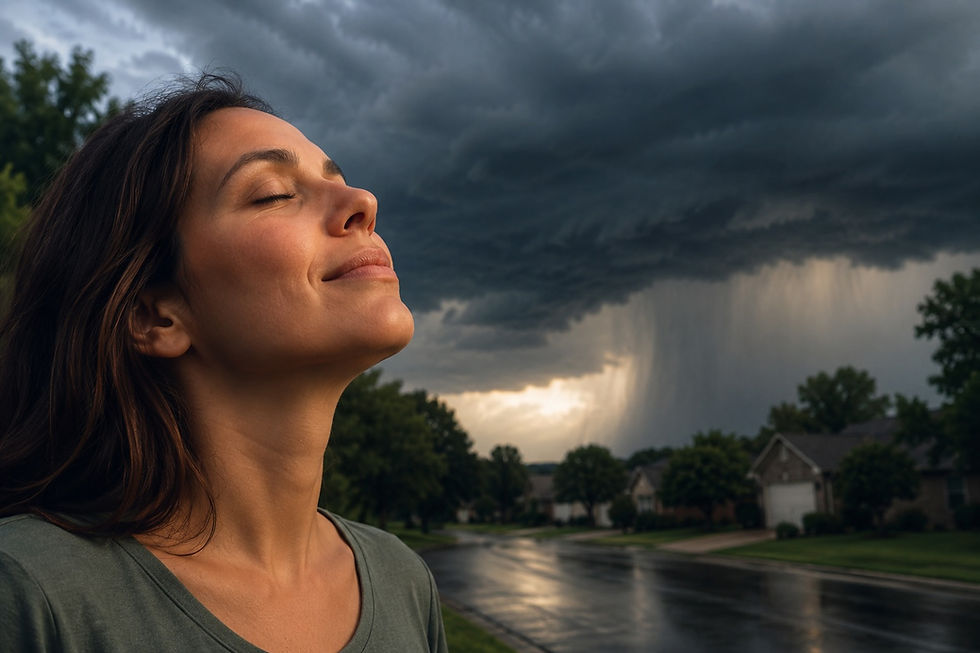
The result is something that feels impossible. A person can be standing in sunshine, looking at a distant thunderstorm on the horizon, and suddenly find themselves in the path of a lightning strike.
The storm is bigger than you think
Part of the problem is that most people only notice the rainy part of a thunderstorm.
What we see from the ground is usually the dark core where rain is falling. But thunderstorms are much larger than that. High above the rain, powerful updrafts spread clouds outward into the familiar anvil shape that can stretch for miles.
That anvil acts like a launching pad for some lightning bolts. In certain situations, electricity can travel outward from the storm and strike well beyond the area where rain is falling.
Ten miles is not out of range
Many people assume they are safe if a thunderstorm looks distant. Unfortunately, lightning doesn’t always respect what looks “close” or “far.”
Lightning has been documented striking more than ten miles away from the thunderstorm that produced it. In rare cases, it can travel even farther. That means a storm parked on one side of town can potentially send a dangerous bolt into an area enjoying sunshine on the other side.
The farther away a storm appears, the more likely people are to let their guard down. That’s often when lightning becomes most dangerous.
Thunder is your warning system
Here’s the rule professional meteorologists, lifeguards, and lightning experts all agree on: if you can hear thunder, you’re close enough to be struck by lightning.
You don’t need rain. You don’t need dark skies overhead. You don’t even need to see lightning. Thunder means electrical activity is occurring close enough to pose a threat.
Think of thunder as nature’s built-in warning alarm. If you can hear it, it’s time to head indoors and wait for the storm to move farther away.
Florida knows this lesson well
Florida consistently ranks among the lightning capitals of the United States, and many lightning injuries occur before the rain arrives or after people think the storm has already passed.
That’s because the dangerous part of a thunderstorm isn’t always located directly overhead. The storm may still be close enough to launch a bolt long after the sky above you has turned blue again.
In other words, sunshine and safety are not always the same thing.
Nerdy nugget
A lightning bolt heats the air around it to roughly 50,000 degrees Fahrenheit. That’s about five times hotter than the surface of the Sun.
The air expands so violently that it creates a shock wave. That shock wave is what we hear as thunder. So every rumble of thunder is evidence that nature just unleashed one of the hottest things you’ll ever encounter on Earth.
Bottom line
A blue sky overhead doesn’t guarantee you’re safe from lightning. Thunderstorms can throw powerful “bolts from the blue” miles away from the rain, reaching places that look completely harmless. If you can hear thunder, treat it as a warning and head indoors.
Become officially Weather Nerdy
Every morning, before these stories appear on the website, subscribers get one fascinating weather story delivered straight to their inbox.
It’s free, takes less than two minutes to read, and just might make you the most weather-savvy person at work.
Join Weather Nerdy Daily at WeatherNerdy.com/daily
About Theo Nash: Theo is Weather Nerdy’s data and maps contributor. He loves finding the one number, map, or weather fact that makes people stop scrolling and say, “Wait… seriously?” Then he explains what it actually means.


Comments