
Why are Hurricane Hunters flying into a storm that doesn’t even exist?

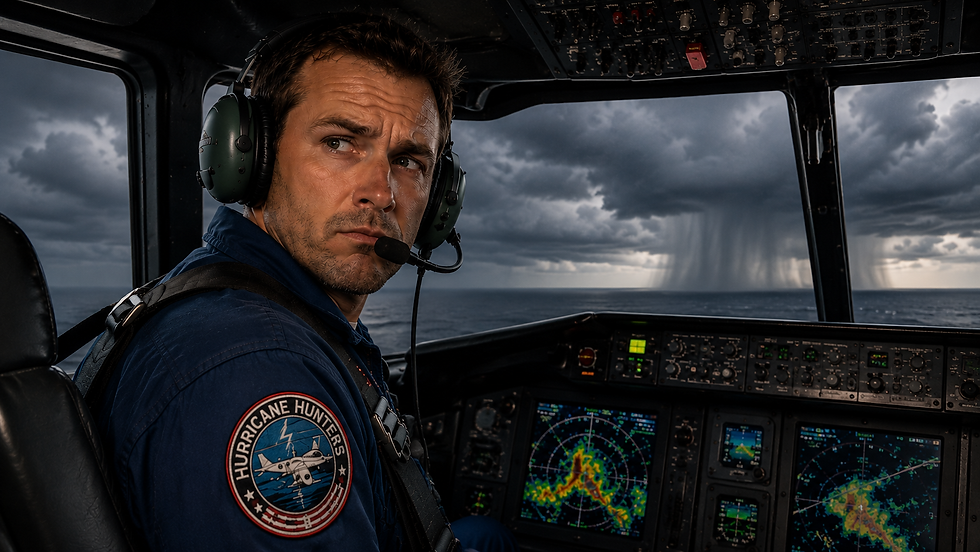
It sounds impossible, but Hurricane Hunters are sometimes sent into a storm before it’s officially classified as a tropical cyclone. Their mission isn’t just to study the storm.
Sometimes it’s to answer the question everyone else is asking: Has a tropical cyclone actually formed?
Why can’t satellites answer that on their own?
Modern weather satellites are incredible. They can see towering thunderstorms, estimate rainfall, and even detect wind patterns from space.
But there’s one thing they can’t always determine with certainty: whether winds are circling around a single, well-defined center near the ocean’s surface. That closed circulation is one of the requirements for declaring a tropical depression.
That’s where the Hurricane Hunters come in.
What are they actually looking for?
Flying directly through a developing storm allows meteorologists to collect measurements that satellites simply can’t.
Inside the aircraft, instruments continuously measure wind speed, air pressure, temperature, and humidity. The crew also releases devices called dropsondes, which parachute through the storm while transmitting detailed information back to the plane.
Those observations help forecasters determine whether the system has become an organized tropical cyclone or is still just a cluster of thunderstorms.

Why does that matter?
At first glance, the difference between an Invest and a tropical depression might sound like meteorologists arguing over technical definitions.
In reality, it affects the forecasts millions of people rely on.
The more accurate the storm’s location, structure, and intensity, the better forecasters can predict where heavy rain, strong winds, and coastal flooding may develop over the next several days.
Does a stronger name mean a stronger threat?
Not necessarily.
Some tropical depressions never strengthen into named storms, while others rapidly intensify into hurricanes. And sometimes a disturbance that never receives a name can still produce flooding rains or dangerous weather.
That’s why meteorologists focus on what the storm is doing, not just what it’s called.
The next time you hear Hurricane Hunters are flying…
…remember that they may not be chasing a hurricane at all.
They could be flying into a storm that doesn’t officially exist yet, helping answer one of the most important questions in weather forecasting. By the time you hear a tropical depression has formed, there’s a good chance a crew of Hurricane Hunters helped make that call.


Comments