
The surprising reason rain has a smell


The surprising reason rain has a smell starts underground
The surprising reason rain has a smell begins beneath your feet, where microscopic organisms quietly produce a compound called geosmin.
These tiny bacteria spend their lives in the soil, completely unnoticed by most of us. Yet they are responsible for creating one of the most recognizable scents in nature.
Meet petrichor
Scientists have a name for that familiar scent.
It’s called petrichor.
The word comes from Greek roots that roughly translate to “the blood of the gods flowing through stone.” That’s a pretty dramatic name for something most of us simply describe as “it smells like rain.”
Tiny bubbles, big aroma
Here’s where the science gets surprisingly cool.
When raindrops strike dry soil, they trap tiny air bubbles. Those bubbles quickly burst and launch microscopic particles into the air, including geosmin.
Those particles then drift upward and straight into your nose.
Nature has been running this process for millions of years.
Your nose is better than you think
Humans are incredibly sensitive to geosmin.
Researchers have found that people can detect it in extremely tiny concentrations, sometimes just a few parts per trillion. That’s like noticing a single drop of something mixed into an Olympic-sized swimming pool.
Your nose deserves a little credit.
Why we love it so much
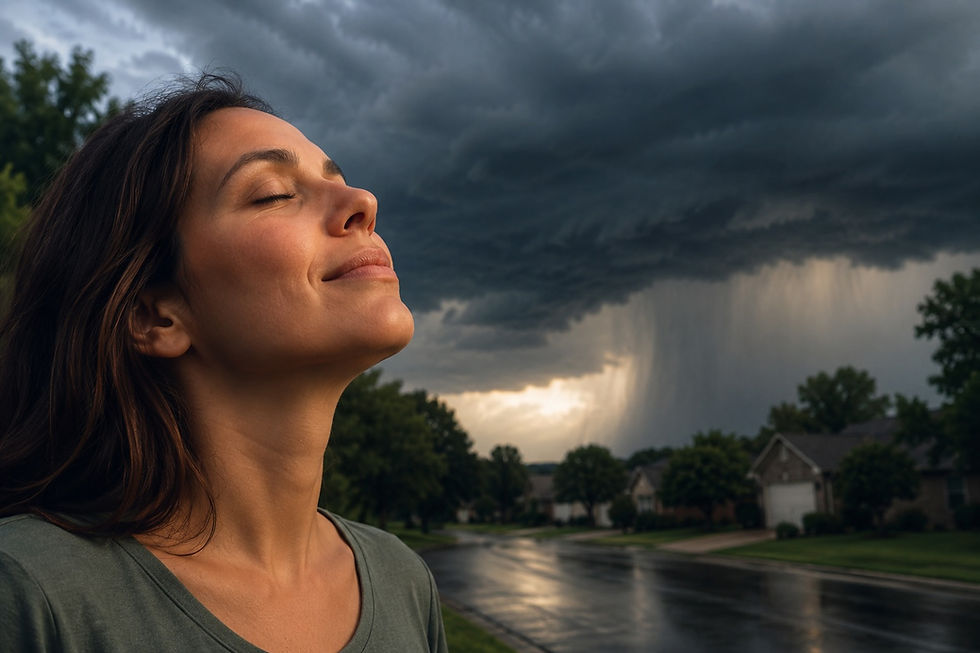
Many people describe the smell before rain as comforting, calming, or nostalgic.
Some scientists believe that for much of human history, rain was closely linked to survival. Rain meant water, cooler temperatures, and healthier crops. Over thousands of years, humans may have developed a positive association with the scent.
Whether that’s exactly true or not, plenty of us smile when we smell it.
Especially after a hot Florida afternoon.
Not every storm smells the same
The scent is usually strongest after a long dry spell.
When the ground stays dry for days or weeks, compounds like geosmin can build up near the surface. The first rainfall releases a burst of aroma that can be surprisingly powerful.
That’s why the season’s first summer thunderstorm often smells stronger than the fifth one in a row.

One of nature’s hidden signals
The next time you catch that familiar earthy scent before a storm, remember what’s really happening.
Tiny bacteria.
Microscopic bubbles.
Millions of airborne particles.
And a remarkably sensitive nose putting all the pieces together.
Pretty amazing for something most of us notice without ever thinking about it.
Get nerdy every morning!
Want more fascinating weather stories like this delivered free every morning?
Visit weathernerdy.com/daily and join thousands of weather curious readers who love discovering the hidden stories behind the world around us.


Comments