
The birds knew first: How birds sense storms before humans do
- Ric Kearbey

- Jun 19
- 3 min read
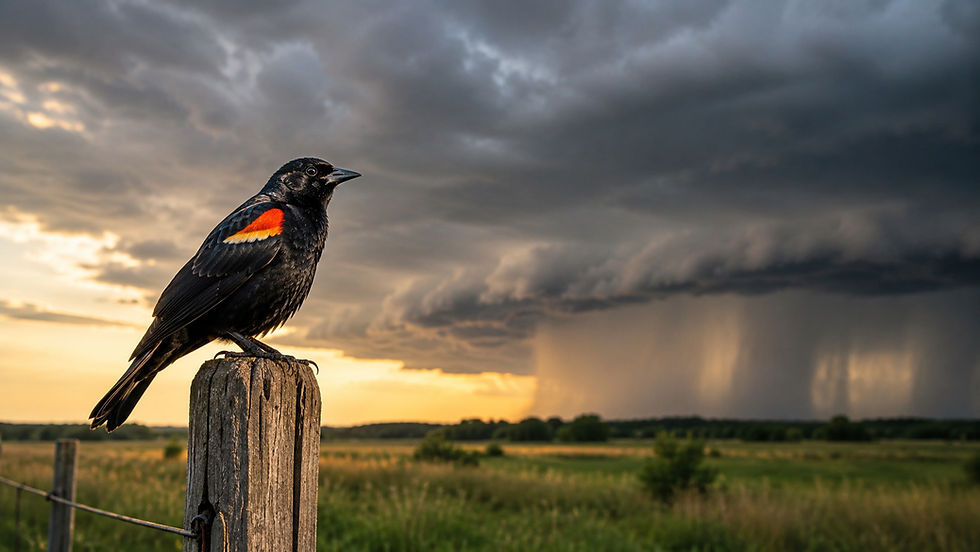
Can birds sense storms before humans do?
Yes. Birds can detect changes in air pressure, wind patterns, and sometimes even low frequency sounds from distant storms before most humans notice anything unusual.
Nature’s original weather app
Have you ever noticed birds suddenly disappear before a thunderstorm?
You’re not imagining it.
Long before radar, smartphone apps, and television forecasts, people watched birds for clues about changing weather. Farmers, sailors, and fishermen noticed the same pattern over and over again. When the birds changed their behavior, rough weather often wasn’t far behind.
They feel the atmosphere changing
Birds have a superpower most of us don’t.
Many species can sense changes in air pressure, also called barometric pressure. Think of air pressure as the weight of the atmosphere pressing down on us. Before many storms arrive, that pressure begins to fall.
Most humans never notice the difference.
Birds often do.
Scientists believe these subtle pressure changes act like an early warning signal. It’s similar to how your phone buzzes with an alert before a storm arrives, except birds have been using this system for millions of years.

The day the birds vanished
One scientific study left researchers stunned.
Scientists were tracking golden-winged warblers in Tennessee during nesting season. Tiny tracking devices attached to the birds showed something strange.
The birds suddenly left.
Not for a few hours.
Not for the afternoon.
They flew hundreds of miles away.
The mystery was solved when a powerful storm system swept through the region less than a day later. The birds had evacuated long before anyone could see threatening skies overhead.
Researchers believe the birds may have detected something called infrasound. These are extremely low frequency sound waves produced by large storms. Humans can’t hear them, but the sounds can travel hundreds of miles through the atmosphere.
In other words, the birds may have heard the storm coming before people even knew it existed.
Why birds fly lower before storms
You’ve probably heard this saying before.
“Birds fly low when rain is coming.”
There is actually some science behind it.
As air pressure falls and winds become more turbulent, flying high can become less efficient and more difficult. Many birds respond by staying closer to the ground where conditions are calmer. Insects also tend to fly lower in humid air, giving birds another reason to stay close to the surface.
It’s a little like choosing a smoother side street instead of a bumpy highway.
The buffet closes early
Birds don’t just change where they fly.
They often change how they eat.
Many species will feed more aggressively before a storm arrives. If heavy rain and strong winds are about to make hunting difficult, it makes sense to stock up on calories while conditions are still favorable.
Honestly, it’s not much different than people loading up on snacks before a hurricane.
Although birds seem far less interested in buying toilet paper.
Tiny meteorologists?
Not exactly.
Birds are not predicting next week’s forecast.
They’re responding to environmental clues happening right now. Changes in air pressure, humidity, wind, temperature, and even distant storm sounds all provide valuable information about what’s happening in the atmosphere around them.
What looks like fortune telling is actually survival.
And they’re very good at it.
So can birds predict storms?
Yes and no.
Birds cannot see the future. They aren’t forecasting next Tuesday’s weather or checking tomorrow’s radar.
But they can detect atmospheric changes that humans often miss. Those signals help them react before storms arrive, making it seem like they knew what was coming all along.
Sometimes nature notices things before we do.
The nerdy nugget
The next time birds suddenly disappear from your backyard before a thunderstorm, pay attention.
They may be responding to changes in the atmosphere that your eyes, ears, and even your weather app haven’t detected yet.
Nature has been running its own weather network for millions of years.
Enjoy weather stories that make you the smartest person at the barbecue.
Sign up free at weathernerdy.com/daily


Comments